Connected / Disconnected

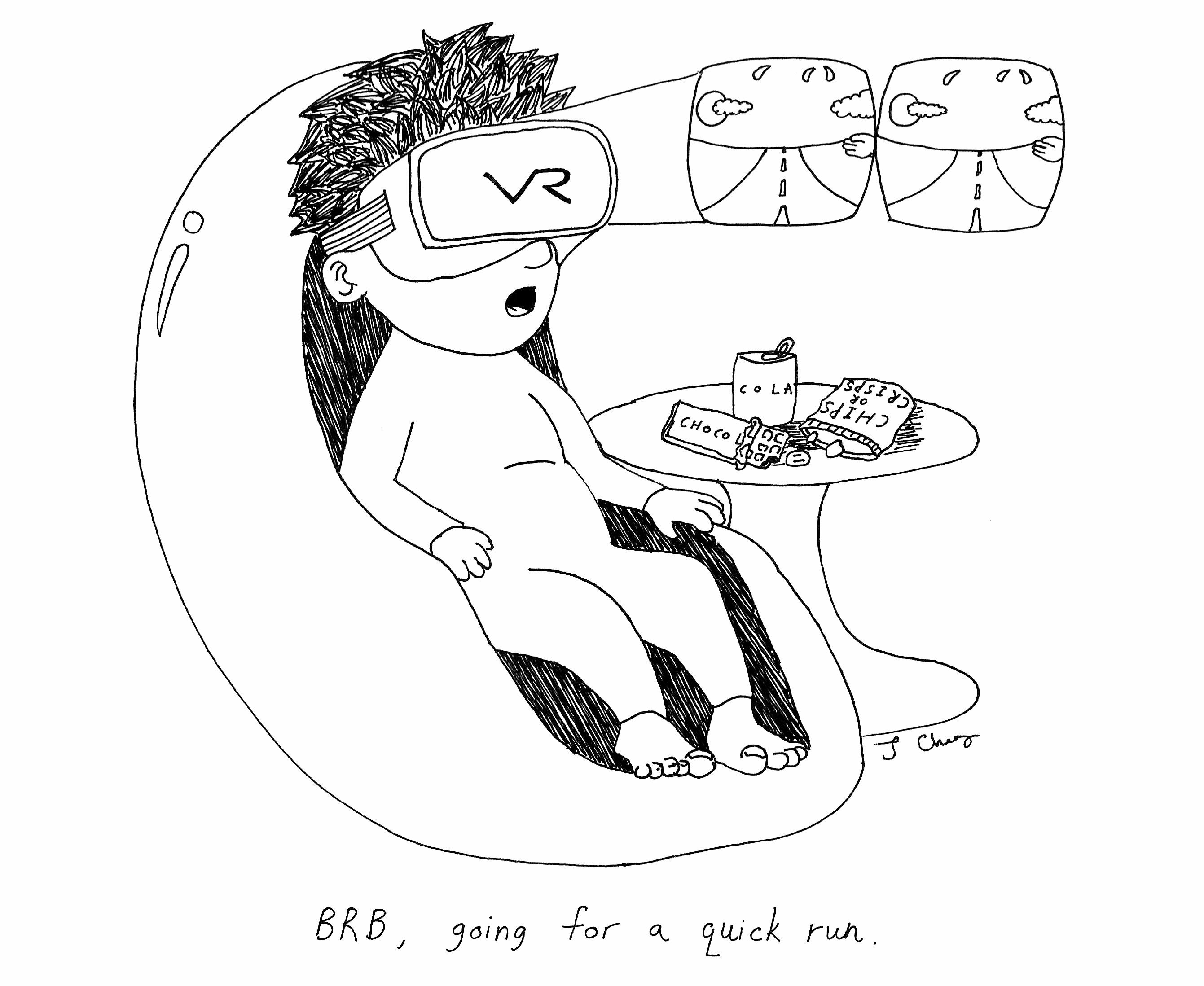
(The cartoon is unrelated.)

Last month, I attended a networking dinner to discuss how Generative AI is reshaping coding practices. Around 50 people were at the event, including tech leads and department heads from Google, Pfizer, UBS, and other companies across various industries.

While the host company was (of course) promoting their own AI solutions1, they also encouraged open dialogue through panel sessions and Q&As. One of the main topics of the night was on vibe coding – using LLM prompts to generate and refine code – and what it could mean for the future of software engineering.

Some attendees were optimistic. A cloud engineer from Google cited Sundar Pichai’s remark that 30% of new code at his company is now written with AI assistance2. The host company chimed in that LLMs aren’t just generating code but also tying development work back to broader software-development lifecycles (hint: story points that write themselves)3. What’s more, they predicted that within the next five years, LLMs will be advanced enough to understand entire ecosystems of programs and generate code that can be integrated seamlessly across codebases. How amazing would that be!

But others voiced concerns. One software engineer reflected on his multi-decade career of building experience from making mistakes and iterative learning4. “How will vibe coding ensure that future tech leaders can understand and navigate the intricacies of programming, of the nuances between Java and Python, and everything else, if AI is going to figure it all out for us?”

The Google engineer responded, “Well, I think in the future, you won’t need to know about Java versus Python. Instead, you’ll need to be really good at prompting and interacting with LLMs5. That’s where coding and engineering are headed — and vibe coding is just scratching the surface.”

Personally, I am skeptical, maybe even cynical.

As technology grows more complex, AI may indeed be the most sensible way to keep everything organized. This is true not just of software engineering, but across many areas of life: financial markets, medical research, communication networks. Each of these industries has grown into multi-layered webs of models, methods, and frameworks – with new tools and approaches emerging so quickly that it seems impossible for any single individual or organization to keep up. Will AI be the best way to help us make sense of these expanding systems, or will it leave us more disconnected because we’re relying on AI to solve everything?

But actually, do we even need to make sense of everything if AI can do it for us?

Back to the dinner event. While vibe coding might sound like fun Gen Z slang, the approach carries real implications in a world where technology continues to grow faster than any one person can handle. And if this doesn’t work, AI-generated components may end up looking as unrelated to the engineer’s eye as the cartoon is to this article.

  1. At work, I receive invitations to ‘exclusive tech roundtables’ or ‘AI leadership summits’ from various companies. These events are part networking, part marketing for the host company’s products and services. Selfishly, I find them a great way to learn new ideas from others! ↩︎
  2. As Google’s CEO Sundar Pichai said during its Q1 2025 earnings call: “I think the last time I had said the number was like 25% of code that’s checked in involves people accepting AI suggested solutions. That number is well over 30% now.” Source: Seeking Alpha ↩︎
  3. ’ve really come to enjoy the genre of memes poking fun at the planning process for software development (SDLC) and its references to “agile”, “scrum”, “ceremonies”, and the classic, “How many story points is that?”. See Instagram example here. ↩︎
  4. A related term here is yak shaving, referring to the seemingly endless tasks one must complete before they can even start coding (e.g., ten minutes to install an IDE, ten days to figure out why it won’t run on your laptop). It is often considered a rite of passage for people entering the developer or engineering world. ↩︎
  5. Research papers such as this one remind me of how deeply technology and human language are intertwined. It will be interesting to see how prompt engineering might shape everyday speech in the future. ↩︎

Connected / Disconnected

Project Bubble Goes Live!

Update from a week later: The fundraiser has now concluded with the hard copies sold out, having raised over £1,600 ($2,100) for Bookmark! This allows the charity to fully fund its reading programmes for 12 children at risk of falling behind in school. Thank you to those who contributed to making a positive difference!

* * * * *

Last month, I wrote about making a storybook for my niece and nephew. In that post, I alluded to publishing the book as part of a fundraising campaign with a charity. I’m excited to announce that the fundraiser is finally here!

* * * * *

About the Charity

The organization I am fundraising for is called Bookmark, and they are a UK-based literacy charity focused on helping children develop their reading skills through a volunteer-led reading programme. I started volunteering with Bookmark over this school year and have been beyond impressed by the charity’s commitment to helping children find enjoyment in reading and, more broadly, in learning.

Last year, Bookmark supported nearly 1,500 children in 90 schools across England. Of this group, approximately half come from disadvantaged backgrounds and a third are speaking English as an additional language. Focusing on literacy early on enables children to do better in school, which could mean lower dropout rates, improved prospects for future employment, and enable greater social mobility.

Really, it means growing the next generation of ideas to make the world a better place.

* * * * *

About the Fundraiser

For the campaign, I am selling both hardcover and e-book copies of the storybook, with 100% of the proceeds going to Bookmark. The prices are listed below, but you can of course donate more if you’d like! I will be combining the payments to make a single donation that will be matched 1:1 by my work place.

This year, Bookmark aims to double the number of children supported through its reading programme. Just £10 will cover the cost of one Bookmark reading session, while £120 will gift a child with the entire 6-week reading programme.

If you are interested in receiving a copy of the storybook, please email me at jacky@jackynotes.com with your mailing address and number of copies desired (hardcopy or e-book), and I will provide payment details to order. Given the small-batch production of the books (there are only 30 hardcover copies available!), I found this helps avoid the fees charged by crowdfunding and payment platforms.

Lastly, if you are interested in finding out more about Bookmark, check out their 2020/21 Impact Report and volunteering opportunities. There are also a number of insightful research reports by UK’s National Literacy Trust if you’d like to learn more about the impact of literacy on disadvantaged communities. Thank you for your time and support!

Project Bubble Goes Live!

Helmets and Conversations

Helmets_and_Conversations

Introduction

There is no way to write an inoffensive thought piece on the protests taking place in Hong Kong. It will enrage at least some people and resonate with a few others. My hope is that it pleases no one and angers just about everyone.

This is an edited collection of notes from my visit to Hong Kong and Shanghai in August. It was a trip I had planned for seeing friends and family, and for rekindling memories with my childhood cities.

Please read with care!

* * * * *

Part 1: Helmets in Hong Kong

What surprised me was the quiet.

I arrived at Hong Kong International just a day after protests at the airport had ended. Posters advocating for “Freedom!” and “Democracy!” had already been removed. The scene was instead spotless and noticeably quiet. Had I not known that airport officials had obtained an injunction to clear out protesters, I wouldn’t have guessed that demonstrations had been taking place here for the past 4 days.

After several months of reading about escalating tensions in the city, this was not the scene I was expecting.

It was a Friday night when I caught my first glimpse of the protests. My friend and I were walking past Statue Square in Central when we came upon a small group of people dressed in black t-shirts and face masks. They were blaring the US national anthem from a boombox and one guy was waving a large US flag high above his head. His face was covered with a bandana and he led the slow-moving march.

My friend and I remarked that this was the ridiculousness of the protests that the media portrayed – it was the ridiculousness that the Chinese media would pounce on. Calling for the US was a distraction from the actual civil issues at hand and did not offer any realistic solutions for the people of Hong Kong.

At the tail end of the march were protesters collecting discarded plastic bottles and holding signs reminding their peers to clean up after themselves. This resonated more with me. We should all be marching for cleaning up the environment.

It was exciting to be so close to the protests. I thought this would be a preview to seeing more violent clashes over the weekend. After all, the past few weeks’ worth of news articles and online videos had been painting a scene of escalating tensions and outbreaks of fights across the city.

Sunday came and people with umbrellas filled the streets weaving in and out of Admiralty to Causeway Bay and other areas that I only recognized by MTR station names. According to organizers, 1.7 million Hong Kongers showed up on this day, starting at Victoria Park where a headcount was being taken. Later that night, local news channels reported that police forces had estimated the crowd size at roughly 130,000.

My friend and I went out to survey the scene in the early evening. We walked near Pacific Place and stopped at a footbridge overlooking Queensway. The road beneath was covered with umbrellas moving under the light rain. All along the glass walls of the bridge, people took out their devices to take photos and videos of the march. Many of them were protesters coming from the demonstration. There were entire families dressed in black with strollers and toddlers, getting ready to head home as night fell.

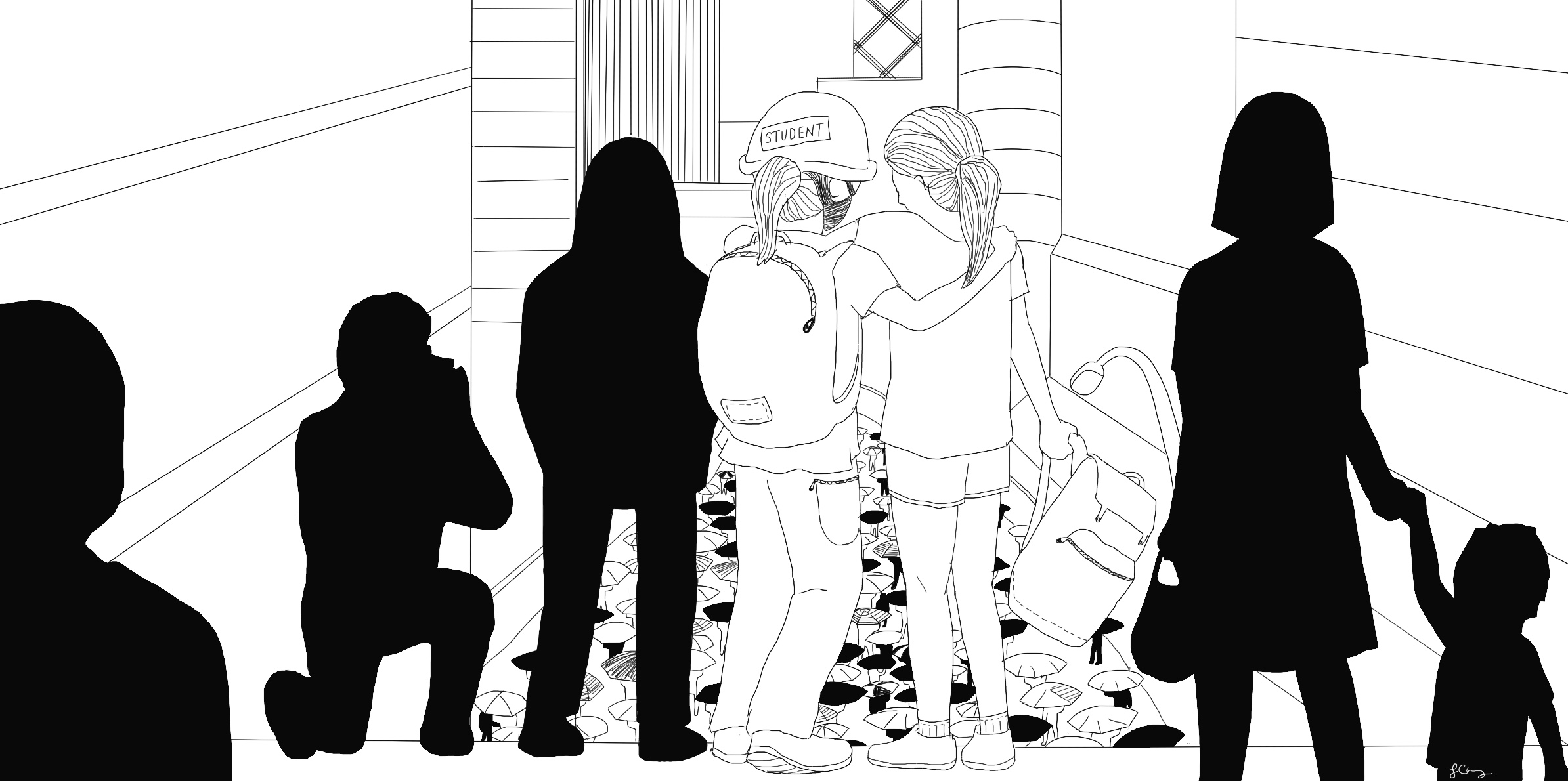
One particular moment stands out in my memories: On the footbridge was a girl dressed in a black t-shirt, black cargo trousers, and dark colored boots. She had on a heavy-duty helmet, goggles, and gas mask. On the back of her helmet, right above her ponytail, was the word “STUDENT”. She stood next to her friend, who eventually threw an arm over her shoulders as they walked into the mall.

It was a striking image because the helmet seemed to be nearly as wide as the shoulder width of the girl’s slender frame. Here was someone who is just a kid, outfitted with battle gear. There’s a romanticism to fighting for dreams as you’re just learning to grow up, as if keeping a promise you made in your childhood. Yet for all its determination, there also seemed be a sense of wanderlust, a feeling of “let’s see where the wind blows” in fighting for ideals. Maybe this is why Kurt Vonnegut’s Slaughterhouse Five is also called The Children’s Crusade.1

That Sunday, the protests ended peacefully. But as the sea of umbrellas moved through Hong Kong Island, there were still no signs for where all this was headed.

* * * * *

Part 2: Conversations in Shanghai

I took an early Monday morning flight to Shanghai.

On the first day, I went to see family and old relatives. They jokingly asked was if I had taken part in those Hong Kong protests with those Hong Kong youths. Their impression was that the city was in shambles, all because of a younger generation who do not know any better.

Kids fighting a children’s crusade.

I responded that it wasn’t just misguided students who were leading the marches, that there were also older folks and people from all walks of life. I’m not sure if my relatives thought any more of it. Perhaps they were referring to the violent antics that generally did not involve the elderly or mothers with strollers.

My usual news consumption comes from Financial Times and the like, so it was easy to brand their perceptions as due from misinformation and lack of details – this is what I read about every day. But seeing their subjectivity (generally against the Hong Kong protests) made me question the biases I myself am subjected to.

A few nights later I was at a dinner with my parents and a few family friends. There was a husband and wife, both slightly older than me and working as high school teachers. In a mix of broken Mandarin and English, we shared our understandings and views of the protests. Questions popped up alongside plates of Shanghainese dishes served to our table.

“What was Hong Kong like while you were there?”

“Are the protests something you hear about every day in Shanghai?”

“Did you get a sense of what it is that the protesters are really fighting for?”

“How do you think the Chinese government is planning to respond?”

The husband and wife spoke out against the violent clashes between the protesters and police, and cited media stories on how the US government is paying local Hong Kongers to join the protest. But these thoughts were not signs of brain-washing or suppression, as I often hear described in Western dialogues. Instead, the tone is oddly similar to the news that I read, about how the Chinese government is sending buses of mainlanders into Hong Kong to hold pro-Beijing rallies.

To both sides I say, “Well, you’re probably not wrong.” I wouldn’t doubt it if some level of funding for the HK protest organizers came from US government agencies. Tim Wiener’s Legacy of Ashes2 has taught me to know better. And I wouldn’t doubt it if Chinese authorities did fashion a plan for counter-protest events.

By the end of the meal, the conversation had turned to life in Shanghai. We talked about how everyone uses VPN to binge-watch the latest Netflix shows. I asked if people are afraid of getting caught, but the husband shook his head. It is just how things are.

VPN to watch Netflix and secret government payments to advance national interests. It is just how things are.

* * * * *

Part 3: Taiping Rebellion and Rear View Mirrors

My favorite page on Wikipedia is on the Taiping Rebellion. This is not because the historical conflict has anything in common with current events (and I certainly hope no one is claiming to be Jesus’ brother), but because there’s a section stating “The terms used for the conflict and its participants often reflect the viewpoint of the writer.”3 We really ought to include this footnote in more publications.

Oftentimes I read about Hong Kong’s situation as being a battleground between democracy and authoritarianism. It’s lunatic how conveniently we can organize the chaos of conflicts into neat drawers and shelves, as if state actors are simply acting out the latest Game of Thrones plot lines. We get so hung up on dictating the good guys and the bad guys that we neglect the complexities of the narrative itself. But as I learned from Bill Watterson’s Calvin and Hobbes, no one really knows where the story is headed.4

Note to self: Language can just as easily be used to oversimplify ideas as to illustrate them in excessive detail. A helmet can be described as part of a battledress or as a means of safety precaution. As mentioned earlier, please read with care.

Another footnote we should use more often, as stolen from rear view mirrors: “Objects may be closer than they appear.”

Anything can be belittled or blown up by the perspective of the author. That’s how we get to crowd estimates being either 1.7 million or 130,000.5 It might seem impossible to figure out what the real number should be. The good news, though, is we have more resources than ever before to investigate. Not only are data and analytics right at our fingertips these days, technology has also allowed us to have more discussions with other people. It’s a blessing to be able to learn from those who think, see, and experience life differently. I do wish everyone would share just a few more conversations.

So before I forget: The terms used for this conflict and its participants reflect the viewpoint of the writer. Also, objects may be closer than they appear.

Sources:

    1. Vonnegut, Kurt. Slaughterhouse-five. New York: Dial Press, 2005. Print.
    2. Weiner, Tim. Legacy of Ashes: The History of the CIA. , 2007. Print.
    3. https://en.wikipedia.org/wiki/Taiping_Rebellion#Names
    4. https://www.gocomics.com/calvinandhobbes/1991/02/18
    5. https://graphics.reuters.com/HONGKONG-EXTRADITION-CROWDSIZE/0100B05W0BE/index.html
Helmets and Conversations

Running into 2084

fullsizeoutput_7c9

Here is a story for another time. It begins a few months earlier and ventures into the year 2084.

Filmmaker Casey Neistat once remarked that sleep can be replaced with exercise. Instead of sleeping 8 hours, he suggested waking up 2 hours earlier to go running. I prefer to phrase it differently: running can make you feel better when you are sleep-deprived. So on the weeks when I sleep 5 to 6 hours a night, going out for a run calms my nerves and clears up my mind. Sometimes I like to go for harder runs, other days a softer jog.

Lately, I’ve been enjoying podcasts during my longer runs, usually listening to shows such as Radiolab, 99% Invisible, Song Exploder, and Imaginary Worlds. These podcasts tell stories that range from the intellectual, to the creative, the innovative, and the emotional. It’s a great way to lose myself in another world when I’m running for several hours – and especially so when I am literally lost during a run.

But that is a story for another time.

One recent podcast episode talked about EVE Online, a massive multi-player game with an economy that has been compared to small countries (both for scale and for theory). EVE Online is set in a virtual universe and has its own monetary system. The in-game currency, known as ISK (InterStellar Kredit), can be bought with real-world money based on a live exchange rate. Players spend ISK to boost their avatar’s lives, purchase virtual weapons, and even build space battleships that are said to span the size of entire real-world suburban neighborhoods. Just one of these virtual warships can cost several thousands of real US dollars.

Because similar to the real world, a damning amount of money is spent on virtual wars.

And so the podcast told a story of how several fleets of virtual spaceships, worth hundreds of thousands of real American dollars in all, were destroyed on a single fateful day in January 2014, during a battle known as the Bloodbath of B-R5RB. The clash was part of a larger conflict between American video gamers and “The Russians”, for inter-galactic domination! (Cue the “muahaha” evil laugh).

In the end, the Americans won the larger war, in part because the opposition had imploded. “The Russians” were actually a collection of gamers from different Eastern European countries; their downfall coincided with the timeline of the Crimea crisis, during which Ukrainian gamers began sabotaging the cyber lands of their Russian (actual Russians) allies while, outside their computer screens, the Russian Federation was conducting a takeover of Ukraine’s Crimea.

Imagine that: the fate of a video game decided by real-life current events!

The podcast had made me curious about what it means to be headed towards a reality that’s sharing an expanding grey area with virtual worlds. Will we one day forget the line that separates the two? Worst yet, could we forget that technology is built from reality, and not the other way around?

So then I also imagined a world flipped, one where the computerized space is deciding the fate of reality itself. Perhaps the next major economic disaster will stem from provocations to digital currency systems. Or maybe today’s tech corporations will eventually replace the political structures of nation-states. Internet access might be added as a basic human right, placed right next to the fight against hunger and poverty. What if you could no longer buy groceries unless you had an Amazon account linked to your Bitcoin savings?

Introducing 2084: The futuristic version of Winston and his Big Brother!

Jump to a few weeks after that long run. I am on a plane flying from New York to London. I turned on my Amazon Kindle and tapped on “Ready Player One” by Ernest Cline, a novel I’ve been meaning to read before Spielberg’s film adaptation gets released. I immediately became absorbed in the story, which is set in a dystopia where everyone finds their escape from the broken world via a virtual reality game known as OASIS. The OASIS universe is depicted as a far better place, with free education, glamorous dance clubs, unlimited resources and even giant mech robots!

But as fun as the book was to read, the story reminded me of how easily digital space can become the primary reality for people. The plot was centered on people living out entire lives via a virtual universe, and somehow this fantasy land didn’t seem so foreign. Does that mean we are on a trajectory towards such a reality? (Insert dramatic music here.)

In the end, both the podcast and novel led me to wonder: just how aware are we of technology’s evolution? Social media and smart phone apps are no longer the novelty items that we used to play with to take a breather from the real world. Instead, they are intertwined into every day life. Myspace was great for personalizing a digital profile, but Facebook has flourished by personalizing the news content that we check first thing each morning. How dramatically technology has transformed in just one decade.

Finally, back to my run. It was a slightly longer session because I did actually get lost. After three hours of running on gravel roads and concrete bridges, I pulled out my phone to check the stats recorded by my running app. Just as I tapped the “Finished run” option, the application unexpectedly restarted itself and to my horror had erased all traces of the run! Gone were my mile splits, average pace, and estimated calories burned.

So, in a bout of tepid humor, I texted my friend, “If the app doesn’t show it, did I even run?”

But again, a story for another time.

Sources:

https://www.imaginaryworldspodcast.org/world-war-eve.html
http://reason.com/archives/2014/05/07/a-video-game-economy-the-size
https://www.wired.com/2014/02/eve-online-battle-of-b-r/
https://www.youtube.com/watch?v=DRe9DBosLD4
“Ready Player One” by Ernest Cline
And “Thank you!” to an individual who introduced me to some wonderful podcasts

Running into 2084